
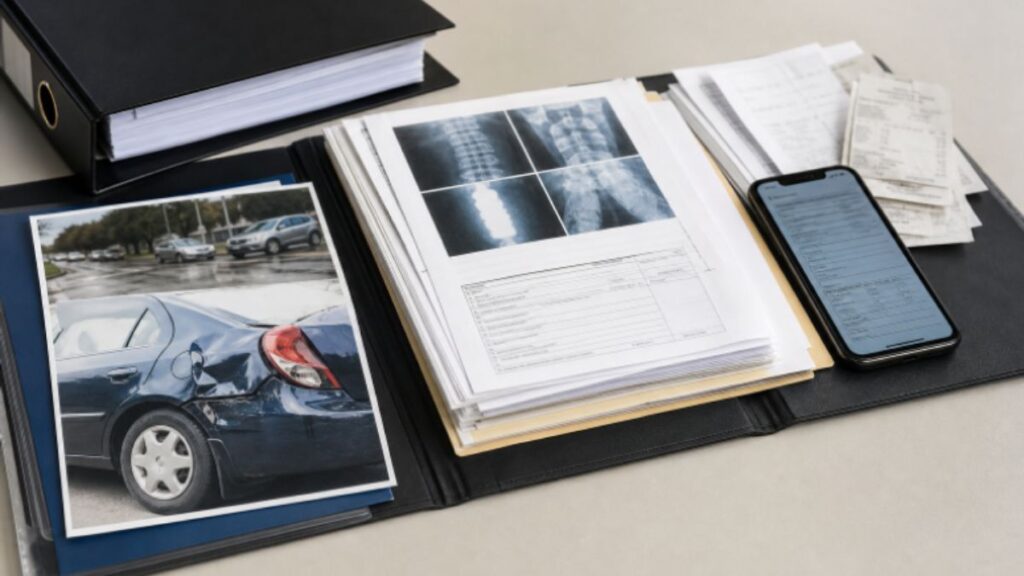
Strong evidence can turn an injury claim from a disagreement about what happened into a clear, well-supported account of responsibility, injury, and loss. Whether the injury happened in a vehicle collision, a fall, a workplace incident, or another preventable event, the details gathered early often matter most. A personal injury attorney in Monroe County can help an injured person evaluate the available proof and identify information that should be preserved.
Evidence does more than show that an accident occurred. It helps answer the central questions in an injury claim: Who was responsible? What injuries resulted? Was the medical care connected to the incident? What financial and personal losses followed? The most persuasive claims are usually supported by several reliable forms of evidence that tell a consistent story.
The Core Elements Evidence Should Support
Every claim is different, but useful evidence generally supports three areas. First, it should show liability, meaning how another person, business, property owner, or organization may have acted carelessly. Second, it should show causation, meaning that the event caused or worsened the injury. Third, it should show damages, including medical expenses, lost income, pain, limitations, and other measurable losses.
A single item rarely proves everything. A photograph may show a wet floor, but video footage, an incident report, maintenance records, and witness observations may better explain why the hazard existed and whether it should have been addressed. The goal is not simply to collect documents. It is to preserve accurate information that fits together.
Evidence That Helps Establish What Happened
Photos and Video
Images taken soon after an incident can preserve conditions that may quickly change. Photograph vehicle positions, damage, skid marks, debris, damaged pavement, lighting, warning signs, spilled substances, footwear, visible injuries, and the broader location. Take both close-up and wide-angle images when safe to do so. Video may also capture traffic flow, weather, sounds, or unsafe conditions that still photographs cannot show.
Official Reports
Police reports, incident reports, workplace reports, and emergency response records can document the date, location, involved parties, and early descriptions of what occurred. After a vehicle collision, Wisconsin drivers should understand the requirements for reporting a crash, particularly when injuries or significant property damage are involved. An official report is not always the final word on fault, but it can become an important reference point.
Witness Information
Independent witnesses can be valuable because they may have no personal stake in the outcome. Get their names, phone numbers, email addresses, and a brief note about what they saw or heard. A witness who observed a driver looking at a phone, a store employee who knew about a recurring hazard, or a bystander who saw the immediate aftermath may provide facts that are unavailable elsewhere.
Physical and Digital Evidence
Keep damaged property when possible. A broken helmet, torn clothing, defective product, damaged bicycle, or vehicle component may help show the force or mechanics of an incident. Digital evidence can be equally important, including dash-camera footage, security video, text messages, call logs, delivery records, maintenance logs, GPS data, and electronic communications. Some video systems automatically overwrite recordings within days, so prompt preservation requests may be necessary.
Medical Evidence Connects the Injury to the Event
Medical records often carry substantial weight because they document symptoms, examination findings, diagnoses, treatment plans, referrals, prescriptions, and recovery progress. Seek appropriate medical attention promptly after an injury, even if symptoms initially seem manageable. Pain, concussion symptoms, soft-tissue injuries, and internal injuries may not be obvious at the scene.
Follow treatment recommendations when possible, attend follow-up appointments, and communicate honestly with medical providers about symptoms and prior health conditions. Gaps in care may be explained by scheduling problems, transportation issues, cost, or a worsening condition, but unexplained gaps can give an insurer room to argue that the injury was minor or unrelated.
Evidence of Financial and Personal Losses
Injury claims may involve more than an emergency room bill. Save medical invoices, pharmacy receipts, mileage records for appointments, assistive-device costs, repair estimates, and proof of household help or other out-of-pocket expenses. If an injury affects work, keep pay stubs, tax records, time-off records, employer communications, and documentation of missed opportunities or reduced duties.
A simple daily journal can also be useful. Record pain levels, sleep problems, mobility limits, missed events, treatment appointments, and activities that are now difficult. Specific entries are more helpful than general statements. For example, note that lifting groceries, driving, climbing stairs, or caring for a child became difficult on a particular day.
Common Problems That Can Weaken a Claim
- Waiting too long to report an incident or seek medical care without documenting the reason.
- Giving inconsistent descriptions of how the injury happened.
- Failing to identify witnesses or preserve photographs before conditions change.
- Posting statements, photos, or videos online that appear inconsistent with claimed limitations.
- Repairing, discarding, or altering important physical evidence before it is documented.
- Signing broad releases or accepting a settlement before the full medical picture is known.
Steps to Take After an Injury
- Prioritize safety and obtain emergency help when needed.
- Report the incident to the appropriate authority, property owner, employer, or law enforcement agency.
- Take photographs and collect contact information while details are fresh.
- Get a medical evaluation and follow the care plan.
- Keep all records in one place, including messages, bills, reports, and receipts.
- Write down a factual account of the incident as soon as possible.
Why Preservation Matters
Evidence can disappear quickly. A business may erase surveillance footage, weather conditions can change, witnesses may forget details, and damaged property may be repaired or discarded. Taking prompt, organized action protects the accuracy of the claim and reduces the chance that important facts will be lost.
Conclusion
The evidence that makes an injury claim stronger is usually practical, timely, and consistent. Clear photos, reliable witnesses, complete medical records, official reports, and careful proof of losses can help show the full impact of an injury. Preserving that evidence early gives injured people a better foundation for understanding their options and pursuing a fair outcome.