
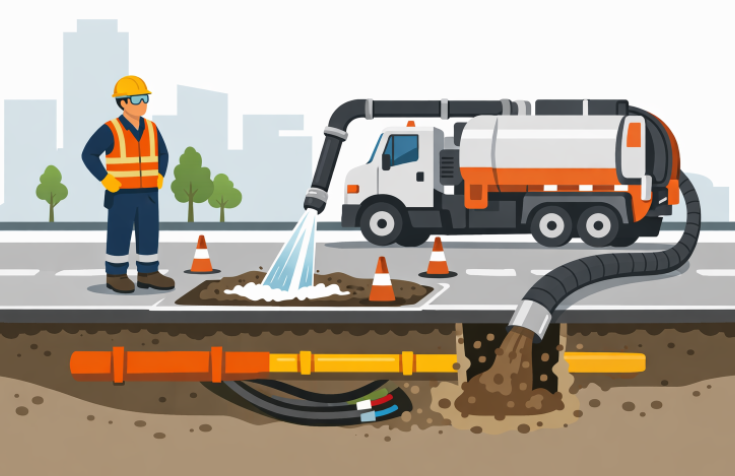
Hydro excavation has dramatically changed the landscape of the excavation industry by offering a safer, more accurate alternative to traditional digging methods. By utilizing pressurized water combined with a powerful vacuum system, hydro excavation minimizes the risk of utility strikes and boosts overall project efficiency. Mastering best practices is crucial for optimizing results and protecting both workers and infrastructure.
As urban environments grow increasingly complex, companies are seeking innovative solutions that allow for precise digging without compromising underground utilities. Hydro excavation stands out for its unmatched accuracy, especially when compared to mechanical digging. By combining new technology, careful planning, and thorough operator training, contractors can exceed safety requirements and enhance project outcomes on every job site.
Understanding Hydro Excavation
Hydro excavation uses high-pressure water to loosen soil, which is then removed by a vacuum, enabling accurate, non-destructive digging. This technology is particularly beneficial in cities and densely populated areas where numerous pipes, cables, and other underground utilities are packed tightly. Compared with manual or mechanical excavation, the precision of hydro excavation minimizes the risks associated with striking crucial infrastructure, helping companies comply with environmental and safety standards.
For companies that prioritize efficiency and safety, hydro excavation is quickly becoming a preferred solution. Utility mapping, advanced detection tools, and operator expertise are now integral components of many urban construction projects. According to the U.S. Department of Transportation, damage prevention and proper excavation practices are fundamental, especially as cities become more congested with essential services and utilities.
Safety Best Practices
Creating a safe working environment is non-negotiable in hydro excavation. The following vetted practices should be integrated into every project:
- Utility Locating: Before initiating any excavation, contact your local utility locating service. Request identification and marking of all underground utility lines to prevent accidental strikes. This step is both a legal requirement and a critical safety measure.
- Appropriate Water Pressure: Set the water pressure to break up the soil without damaging pipes, cables, or other delicate infrastructure. It is widely recommended to keep the nozzle at least 8 inches away from utilities to avoid direct contact and possible damage.
- Personal Protective Equipment (PPE): Always outfit crews with essential PPE, including hard hats, gloves, high-visibility vests, and safety goggles. Protecting workers from flying debris and other site-specific hazards is essential for safety compliance.
- Site Assessment: Analyze each site for potential hazards or environmental concerns. Address possible issues such as contamination, unstable ground, or hazardous atmospheres before work begins.
Enhancing Efficiency
In addition to safety, maximizing operational efficiency is important for completing projects on time and within budget. These strategies will help achieve better outcomes:
- Equipment Selection: Use equipment with features such as a robust vacuum system, extended boom reach, and large debris tanks to support work in restricted spaces and to reduce the frequency of emptying cycles.
- Operator Training: Ongoing, comprehensive training ensures operators understand both the technical aspects of the equipment and the safety protocols in place. Refresher training and equipment-specific instruction are highly recommended.
- Regular Maintenance: Routine preventive maintenance extends the life of hydro excavation machinery and reduces the risk of unscheduled breakdowns, helping prevent costly project delays.
- Environmental Considerations: Manage excavated materials responsibly by storing and disposing of them appropriately to minimize environmental impact. Following local and federal environmental regulations is essential.
Real-World Applications
Hydro excavation is remarkably adaptable and is gaining traction across multiple sectors. Key applications include:
- Urban Infrastructure Projects: This technique is ideal for exposing utilities for inspection or repair, allowing work in busy or densely built settings without significant surface disruption.
- Emergency Repairs: In situations requiring prompt access to damaged lines or pipes, hydro excavation is fast and precise, reducing downtime for residents and businesses.
- Environmental Remediation: Hydro excavation delicately removes contaminated soil or materials from sensitive environments, ensuring thorough remediation and protecting nearby ecosystems.
Widespread adoption of hydro excavation in construction, utility maintenance, and environmental management has also been noted globally. Industry organizations such as the American Public Works Association have endorsed the trend toward safer, more sustainable excavation methods in urban settings.
Diverse Benefits and Future Developments
In addition to safety and efficiency, hydro excavation offers significant environmental and logistical benefits. Unlike mechanical digging, which often disrupts large surface areas, hydro excavation limits disturbance to the required site. This reduction in unnecessary excavation also means less surface restoration afterward, further streamlining project completion and saving costs on post-dig repair work. It is especially valuable in locations with existing landscaping, pavement, or historic features that require preservation. By minimizing restoration needs and debris, companies can support sustainability goals while still achieving rapid excavation.
Another key advantage is that hydro excavation reduces noise and dust pollution compared to heavy machinery, a vital consideration in populated neighborhoods, schools, hospitals, and commercial districts. This technology not only enhances safety but also improves community relations, as reduced disruption keeps both property owners and the general public satisfied. Furthermore, technological advancements in vacuum recovery, water recirculation, and the use of recycled water are making hydro excavation even more eco-friendly and resource-conscious. As the industry evolves, ongoing research and innovation are expected to deliver smarter, more automated machines, improved precision controls, and digital project-monitoring tools, helping managers oversee every detail from start to finish. Preparing for such advancements now can give businesses a competitive edge in the rapidly advancing excavation sector.
Conclusion
Following best practices for safety and efficiency in hydro excavation secures both workers’ wellbeing and infrastructure longevity. Effective planning, routine equipment checks, and in-depth operator training are the bedrocks of successful hydro excavation projects. By investing in these strategies, businesses can fully leverage this advanced excavation technique, achieving consistent, high-quality results while maintaining a strong safety record.