
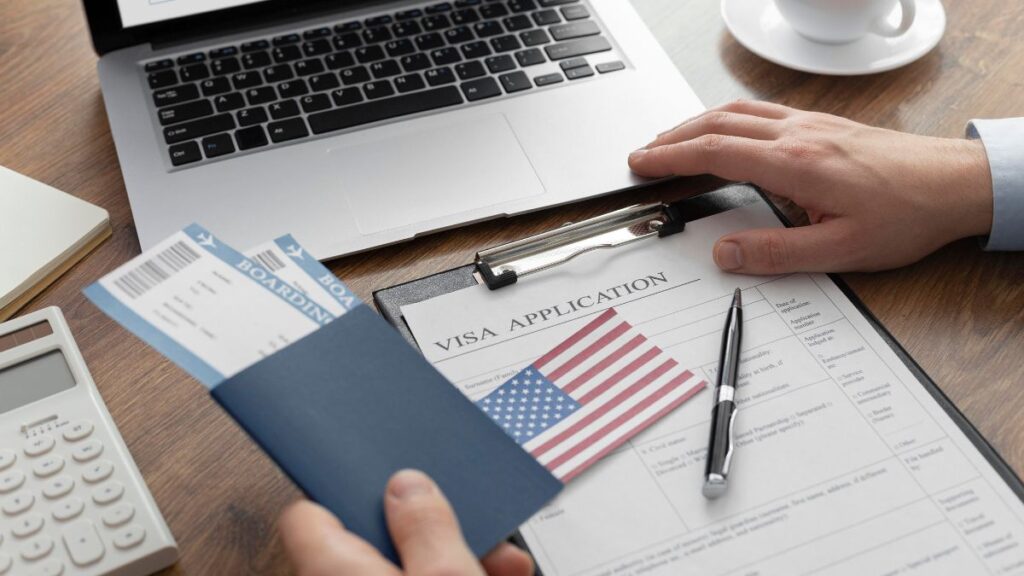
Navigating the complex world of U.S. immigration can feel like learning a new language. There are acronyms, form numbers, and legal jargon that can trip up even the most prepared traveler. But at the heart of every journey to the United States is a single, crucial document: the visa.
What Is an Immigrant Visa?
An immigrant visa is designed for foreign nationals who intend to live and work permanently in the United States. It is the pathway to obtaining a Green Card (Permanent Resident Card).
When you apply for this type of visa, you are declaring your intent to abandon your residence in your home country and establish a new domicile in the U.S. Because this grants such significant rights—including the ability to work almost anywhere and eventually apply for citizenship—the scrutiny is intense and the process is lengthy.
Who Is It For?
Immigrant visas are generally reserved for individuals who have specific ties to the United States, typically through family or employment.
- Immediate Relatives:Spouses of U.S. citizens, unmarried children under 21 of U.S. citizens, and parents of U.S. citizens (if the citizen is over 21).
- Family-Sponsored Preference:Specific distant family relationships, such as siblings of U.S. citizens or spouses of Green Card holders.
- Employment-Based:Workers with specific skills, advanced degrees, or extraordinary abilities, as well as investors who plan to create jobs in the U.S.
- Diversity Visa Lottery:Individuals from countries with historically low rates of immigration to the U.S.
Common Examples
- IR1 or CR1:For spouses of U.S. citizens.
- E1, E2, E3:Various employment-based categories ranging from priority workers to skilled laborers.
- DV:Diversity Immigrant Visa.
What Is a Nonimmigrant Visa?
A nonimmigrant visa is for foreign nationals wishing to enter the United States on a temporary basis. The key word here is “temporary.”
When you apply for most nonimmigrant visas, you must prove that you have a permanent residence in your home country that you have no intention of abandoning. You are asking for permission to enter the U.S. for a specific purpose—tourism, medical treatment, business, temporary work, or study—for a specific period of time. Once that purpose is fulfilled or the time expires, you are expected to depart.
Who Is It For?
This category covers a vast array of travelers. It includes tourists, students, diplomats, exchange visitors, and temporary skilled workers.
Common Examples
- B-1/B-2:The most common visa for business visitors (B-1) and tourists (B-2).
- F-1:For academic students enrolled in U.S. colleges or universities.
- H-1B:For specialty occupation workers.
- J-1:For exchange visitors, such as au pairs, interns, or scholars.
- L-1:For intracompany transferees holding managerial or specialized knowledge positions.
The 4 Key Differences
While both documents allow entry into the U.S., the rights and restrictions attached to them are vastly different. Here is how they stack up against each other.
1. Intent and Permanence
The most fundamental difference lies in your “intent.” For a nonimmigrant visa (with dual-intent exceptions like the H-1B), you must demonstrate nonimmigrant intent. This means proving strong ties to your home country—such as a job, property, or family—that will ensure you return home. If a consular officer suspects you plan to stay permanently, your application will be denied.
Conversely, an immigrant visa requires immigrant intent. You must prove you plan to stay. You are moving your life to the U.S., and your application is judged on your eligibility to become a permanent resident, not your likelihood of returning home.
2. Length of Stay
Nonimmigrant visas have strict expiration dates. A B-2 tourist might be admitted for six months. An F-1 student is admitted for “Duration of Status” (as long as they are studying). However, there is always an end date. Staying past this date is a violation of U.S. law.
Immigrant visas allow you to stay indefinitely. Once you enter the U.S. on an immigrant visa, you become a Lawful Permanent Resident. Your Green Card will need renewing every 10 years, but your status generally does not expire unless you commit a crime or abandon your residency.
3. Employment Rights
On a nonimmigrant visa, work is highly restricted. A tourist (B-2) cannot work at all. A student (F-1) has strict limits on off-campus work. Even temporary workers (H-1B) can typically only work for the specific employer that sponsored them.
Immigrant visa holders have broad employment freedom. Once you are a permanent resident, you can work for almost any employer in the U.S., change jobs freely, or start your own business without needing new sponsorship.
4. Path to Citizenship
Only immigrant visas offer a direct path to U.S. citizenship. After holding a Green Card for three to five years (depending on how you obtained it), you may be eligible to apply for naturalization. Nonimmigrant visas do not lead directly to citizenship. You would first need to adjust your status to an immigrant category (a Green Card) before citizenship becomes an option.
Applying for Your Visa: A General Overview
The application processes for these two categories diverge significantly due to the different stakes involved.
The Nonimmigrant Process
This is generally faster but requires you to bear the burden of proof regarding your intent to return home.
- Complete Form DS-160:This is the online nonimmigrant visa application.
- Pay the Fee:Fees vary by visa category but are generally lower than immigrant processing fees.
- Schedule an Interview:Most applicants aged 14 to 79 must interview at a U.S. Embassy or Consulate.
- Attend Interview:You must bring your passport, photo, and proof of ties to your home country. The decision is often made immediately at the window.
The Immigrant Process
This process is more involved, often taking months or years due to annual caps and extensive background checks.
- Petition Filing:Usually, a sponsor (family member or employer) in the U.S. must file a petition (Form I-130 or I-140) with USCIS on your behalf.
- NVC Processing:Once the petition is approved, the case moves to the National Visa Center (NVC) for pre-processing and fee collection.
- Medical Exam:You must undergo a medical examination by an approved panel physician.
- Consular Interview:You will attend an interview at the U.S. Embassy or Consulate. This step, often referred to as consular processing, is the final hurdle where an officer determines your eligibility for permanent residence.
- Visa Issuance:If approved, you receive a visa packet to present at a U.S. port of entry.
Conclusion
Now that you have a general understanding of the steps involved in obtaining a U.S. permanent residence visa, it’s important to note that each case is unique and may require additional documentation or steps.