
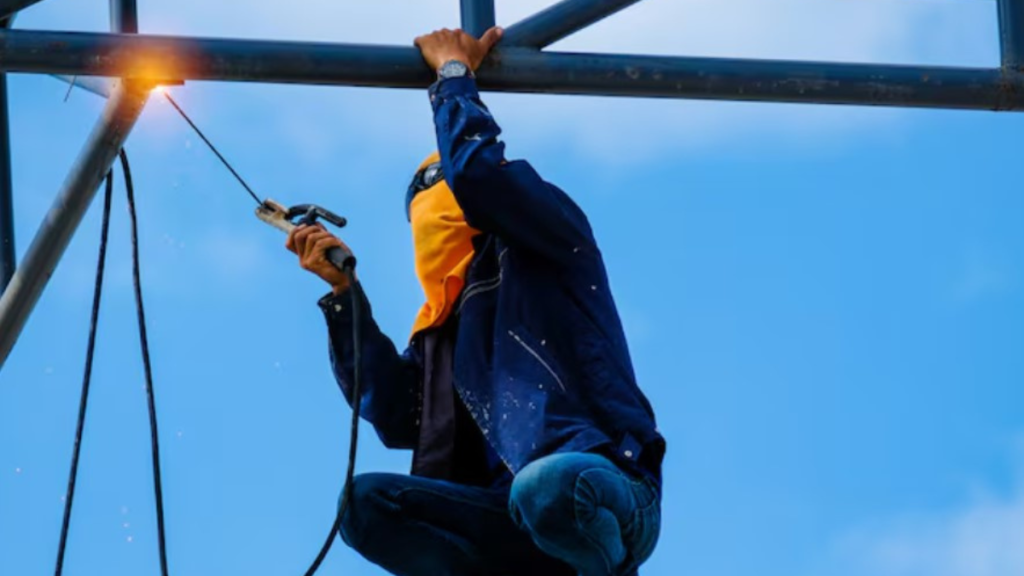
From towering skyscrapers to robust infrastructure networks, structural integrity is essential for the safety and longevity of modern construction and manufacturing. Without reliable welds, even the most precisely engineered structures could falter under load, vibration, or environmental exposure. Working with a skilled welding company, such as Elite Weld & Fab, guarantees that structures are built to withstand demanding conditions while minimizing weaknesses at critical junctions.
Expert welding goes beyond simply joining metals; it transforms how structures handle loads, resist corrosion, and endure over time. The choice of technique, the welder’s skill, and weld quality all impact the strength of buildings, bridges, and machinery. Collaborating with certified professionals who use advanced technologies ensures durability in challenging environments.
Structural failures can threaten public safety and economic stability, so emphasizing quality welding at every project stage is crucial. The American Welding Society notes that proper welding is essential for resilient urban and industrial development.
Seamless Material Fusion for Superior Strength
Unlike bolts or rivets, which inherently introduce interruptions and weak spots into structural frameworks, welding creates a uniform bond between base metals. This seamless fusion meets the demands of demanding applications, allowing the structure to perform as a single, cohesive unit under high loads, vibrations, or shifting temperatures. The result is a dramatic reduction in points of failure, with high-quality welds often proving as strong, or even stronger, than the underlying metal.
Mechanical Fastener Elimination: Reducing Weak Links
Mechanical fasteners are susceptible to loosening or breaking due to constant vibration, cyclic loading, and thermal expansion and contraction. Welding eliminates these concerns by permanently bonding metals. This not only simplifies designs but also reduces maintenance costs and safety checks associated with keeping bolts and connectors tight over time, particularly in bridges and high-traffic industrial settings.
Atomic-Level Metallurgical Bonds
Welding is unique in that it changes the microstructure of the metals at the joint. During welding, metal atoms from both sides of the joint interlock and form atomic bonds. This type of bond is resilient against cracking, embrittlement, and other forms of degradation, helping welded structures perform reliably for decades. Advances in alloy composition and welding techniques can further increase the strength and ductility of joints, while also preventing microcracking and premature failure. For instance, researchers have developed treatments that create steel alloys with superior strength and plasticity, enhancing their performance in structural applications.
Even Stress Distribution Minimizes Failure Risk
Correctly executed welds ensure a uniform distribution of stress across structural connections, particularly in load-bearing elements. Proper stress distribution prevents excessive force concentrations that could otherwise initiate cracks or failure at connection points. For applications subject to dynamic forces, such as heavy machinery or bridges, this even spread of stress is essential for both safety and long-term performance.
Advanced Welding Methods Drive Durability
The advent of friction stir welding, robotic-assisted welding, and precision laser techniques means today’s welds are more reliable and consistent than ever before. These methods offer greater control over heat input, penetration, and alignment, all while minimizing workmanship variation. Additionally, advanced materials such as high-strength, low-alloy steels and corrosion-resistant composites are increasingly used to deliver lighter yet stronger welded frameworks.
Welding as a Shield Against Environmental Hazards
Exposed fasteners and incomplete joints are ready entry points for moisture and chemical agents. In contrast, well-crafted welds create a protective barrier that resists infiltration and subsequent corrosion. In marine, outdoor, and industrial environments where moisture, chemical exposure, and pollutants abound, welds that are professionally inspected and finished can significantly lengthen the service life of vital equipment and infrastructure.
Quality Control and Certified Expertise
Certified welding professionals follow rigorous standards, from material preparation and joint design through to finishing and inspection. This approach reduces variability, ensures compliance with relevant codes, and drastically lowers the risk of weld failure. Structured quality control and independent inspections further reinforce confidence in the consistency and safety of welded assemblies.
Integration of Modern Technologies
Emerging welding technologies such as automation, real-time monitoring, and computer-aided design now play integral roles in both safety and efficiency. Sensors and machine learning algorithms detect defects instantly, while automated welding arms perform repetitive tasks with accuracy unmatched by manual labor alone. These technological enhancements not only enable industry innovation but also support tighter tolerances and better overall project outcomes.
Conclusion
Professional welding stands as the backbone of modern structural integrity. It seamlessly fuses materials, eliminates mechanical weak points, establishes resilient metallurgical bonds, and adapts to the latest technological advances. Whether the priority is longevity, cost reduction, or maximal safety, investing in weld quality is crucial. Dependable structures start with expert welding, ensuring that our buildings, bridges, and machines stand firm for generations.