
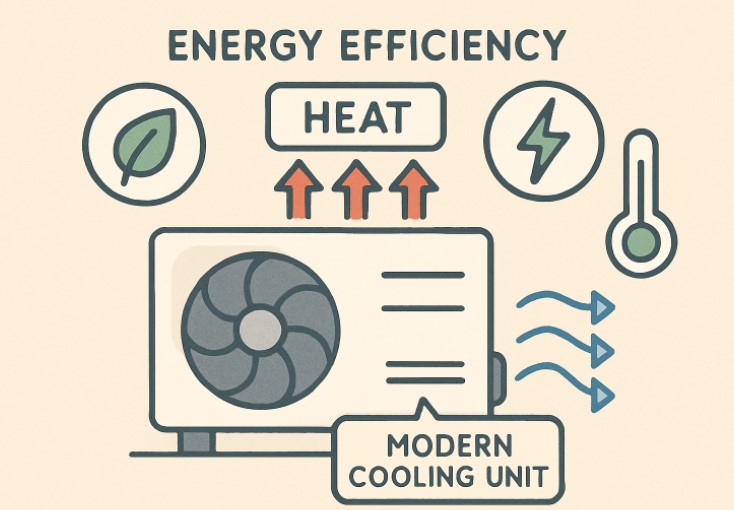
As climate demands grow and energy costs surge, the need for efficient cooling systems is greater than ever. Whether for comfortable living spaces, safe food storage, or the operation of critical IT infrastructure, cooling is at the core of modern convenience. The science driving these systems is constantly evolving, combining classic thermal principles with advanced materials and technologies. Understanding these developments not only helps choose smarter solutions but also supports sustainability efforts toward a cooler, greener future. From the simplest air conditioning units to the most complex industrial setups, the science behind cooling is a fascinating blend of physics, innovation, and environmental responsibility.
As we become more aware of energy usage and environmental impact, the importance of efficient cooling extends far beyond comfort. Innovative techniques are continually redefining what’s possible, reshaping industries, driving down electricity costs, and helping to lower carbon emissions. Today’s systems draw on scientific breakthroughs while answering tomorrow’s challenges. Homeowners, business owners, and facility managers alike benefit from greater efficiency, reliability, and adaptability in cooling solutions. In addition, understanding the difference between effective design and timely air conditioning repair can further amplify these benefits for both end-users and the planet.
Principles of Heat Transfer
All modern cooling systems, regardless of size or complexity, rely on the classical science of heat transfer. The effectiveness of any system depends on how efficiently it moves unwanted heat from one location to another. This can occur through conduction (direct contact between surfaces), convection (heat carried by moving air or liquid), and radiation (energy emitted as electromagnetic waves). Efficient design starts with understanding these core processes and minimizing resistances such as poor insulation or inadequate circuits.
Advancements in Cooling Technologies
Rapid technological advancements have propelled cooling systems beyond traditional designs. One remarkable breakthrough is the passive evaporative cooling membrane developed at the University of California, San Diego. This innovative approach removes heat without relying on mechanical components like fans or pumps, drastically reducing energy consumption and system wear. Such advancements translate into lower operational costs, quieter environments, and crucially, a smaller carbon footprint. Efficient cooling solutions are increasingly shaped by material science and engineering ingenuity paving the way for both eco-friendly commercial units and next-generation residential applications. These advances highlight the momentum behind a global shift to smarter, healthier cooling infrastructure.
Eco-Friendly Cooling Solutions
The sustainability crisis necessitates alternatives to conventional refrigerants, many of which contribute significantly to global warming. Innovations such as the elastocaloric cooling device developed by the Hong Kong University of Science and Technology can boost efficiency by almost 50%. By using advanced materials that safely transition heat, this technology provides effective cooling without the harmful environmental trade-offs of traditional systems. As governments tighten standards and consumers demand greener choices, solutions like these are becoming core to the future of cooling.
Energy Storage in Cooling Systems
Another leap forward is the integration of energy storage with cooling systems. This innovation, exemplified by the National Renewable Energy Laboratory’s Energy Storing and Efficient Air Conditioner (ESEAC), enables significant demand reduction during peak hours by storing ‘coolth’ when electricity is cheap and using it when demand spikes. In pilot programs, energy costs have dropped and grid pressure during heat waves has eased. As weather extremes become more common, such hybrid systems are vital for building resilience and optimizing energy use. Combining cooling with intelligent humidity control, these systems are especially valuable in areas with high temperature variability and unpredictable grid demand.
Data Center Cooling Innovations
Data centers, the digital backbone of the world, consume tremendous amounts of energy for thermal management. To meet the demands of ever-growing computational loads and environmental mandates, companies like Microsoft pioneer innovations such as microfluidic channels etched directly into silicon. This technology can reduce peak chip temperatures by up to 65%, surpassing standard cooling plates by up to 3x in efficiency. Such breakthroughs not only enable faster processing but also extend hardware lifespan and lower long-term energy bills for hyperscale facilities. As reported by the BBC, these advances signal a turning point in the broader mission to build sustainable, high-performance computing infrastructure.
Future Trends in Cooling Technology
The horizon for cooling technology is full of promise. Researchers are investigating radical new directions, such as ionocaloric cooling a method that leverages the flow of ions to induce rapid phase changes and absorb heat with minimal environmental impact. Ongoing work on new materials, advanced energy storage integration, and responsive control systems will continue to push boundaries, offering more adaptable, robust, and efficient options for a rapidly warming world. These trends suggest that efficient cooling will be more personalized, sustainable, and seamlessly integrated into the built environment than ever before.
Investing in advanced cooling systems, timely maintenance, and sustainable technologies will not only lower costs and reduce carbon emissions but will also ensure comfort, productivity, and reliability across all sectors for years to come.