
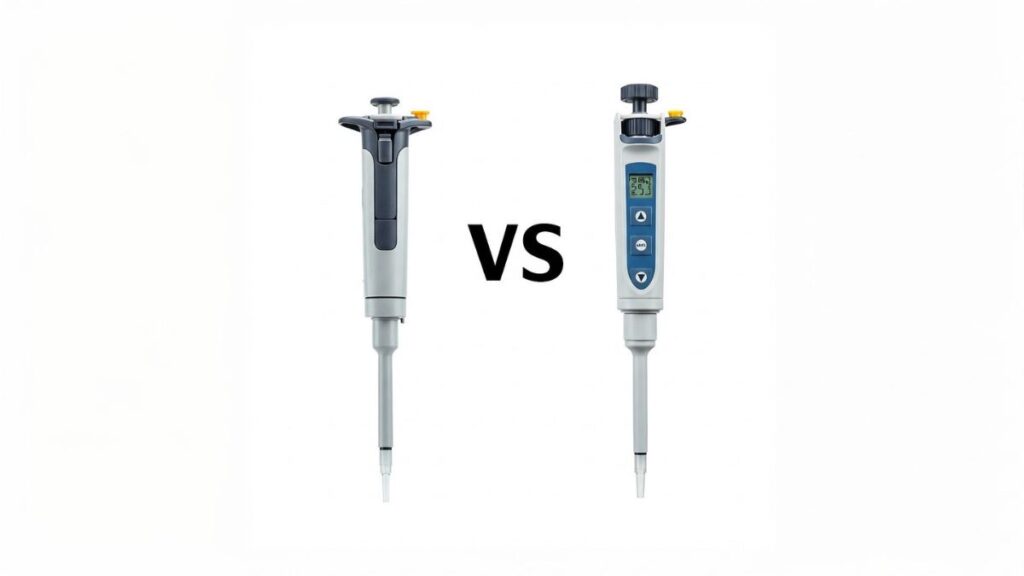
Introduction to Pipettes and Their Importance in the Lab
Pipettes are the unsung heroes of laboratories, playing a critical role in various scientific fields. These handy tools allow scientists to measure and transfer precise volumes of liquids, making them essential for experiments ranging from basic research to advanced clinical studies.
As technology continues to evolve, traditional pipettes have met their match with innovative options like MyPipette.
But what does this mean for your lab? With new features and capabilities emerging, it’s important to understand how these tools stack up against each other. In this comparative review of MyPipette vs. traditional pipettes, we will explore the characteristics that define conventional pipettes and examine how MyPipette stands out in functionality, accuracy, and user experience.
Whether you’re an experienced researcher or just starting out, choosing between MyPipette and traditional pipettes can significantly improve your workflow efficiency and experimental accuracy.
The Features and Benefits of Traditional Pipettes
Traditional pipettes have been a staple in laboratories for decades. Their design is straightforward and reliable, making them easy to use for various tasks.
One notable feature is the adjustable volume setting. This allows scientists to accurately measure different liquid volumes with precision. The smooth plunger action ensures consistent results without excessive force.
Durability is another key benefit. Made from robust materials, traditional pipettes withstand daily wear and tear, ensuring longevity in high-usage environments.
Moreover, calibration remains simple and effective. Regular maintenance ensures their accuracy over time, which is crucial when conducting sensitive experiments.
Many users appreciate the tactile feedback provided during operation. This physical control helps maintain confidence while delivering liquids into containers or samples.
Traditional pipettes also offer compatibility with various tips, enhancing flexibility across research and clinical applications.
Traditional Pipettes: Core Features Overview
| Feature | Benefit for Laboratory Work | Ideal Use Case |
|---|---|---|
| Manual volume adjustment | Precise control over liquid handling | Routine lab experiments |
| Mechanical plunger system | Reliable tactile feedback | Training environments |
| Durable construction | Long lifespan in busy labs | High-frequency use |
| Simple calibration process | Maintains accuracy over time | Budget-conscious labs |
| Universal tip compatibility | Broad application flexibility | Multi-project facilities |
The Advantages and Drawbacks of MyPipette
MyPipette represents a modern evolution in liquid handling technology. Designed with digital precision and ergonomic comfort in mind, MyPipette enhances laboratory productivity.
One major advantage of MyPipette is its digital interface. It allows highly accurate volume adjustments, making experiments more reliable and repeatable. The ergonomic design reduces hand strain during prolonged use.
Additionally, MyPipette often includes programmable settings, making repetitive tasks faster and more consistent. In high-throughput laboratories, this automation improves workflow efficiency.
However, there are drawbacks. MyPipette typically relies on battery power, which may require monitoring and charging. For users accustomed to manual pipettes, transitioning to MyPipette can involve a learning curve.
Cost is another consideration. While MyPipette offers advanced functionality, its initial investment may be higher than traditional pipettes.
MyPipette vs Traditional Pipettes: Feature Comparison
| Comparison Factor | MyPipette | Traditional Pipettes |
|---|---|---|
| Volume Adjustment | Digital precision control | Manual adjustment |
| Ergonomics | Advanced ergonomic grip | Standard grip |
| Automation | Programmable settings available | Manual operation only |
| Power Source | Battery-operated | Manual mechanical |
| Initial Cost | Higher upfront investment | Lower upfront cost |
| Long-Term Efficiency | High efficiency, reduced human error | Depends on user skill |
Real-Life Experiences: Reviews from Scientists Who Have Used MyPipette
Scientists who have adopted MyPipette frequently highlight its user-friendly interface. One researcher mentioned that switching to MyPipette reduced repetitive strain during extended pipetting sessions.
Another laboratory professional praised the programmable settings in MyPipette, stating that it significantly improved workflow efficiency in repetitive assays.
Accuracy is another area where MyPipette consistently receives positive feedback. Users report reliable and consistent measurements—particularly valuable in molecular biology and clinical diagnostics.
Some scientists noted an initial adjustment period when transitioning from manual pipettes to MyPipette. However, most agree that the long-term productivity benefits outweigh the learning curve.
Battery life is generally reported as reliable, making MyPipette practical even in fast-paced lab environments.
Cost Comparison: Traditional Pipettes vs. MyPipette
When evaluating cost, it’s important to consider both short-term expenses and long-term value. Traditional pipettes usually have a lower upfront purchase price. However, calibration, maintenance, and potential user error can increase indirect costs.
MyPipette may have a higher initial investment, but its improved precision can reduce reagent waste and minimize experimental repetition. Over time, this can generate meaningful savings for high-volume laboratories.
Cost Breakdown Analysis
| Cost Factor | MyPipette | Traditional Pipettes |
|---|---|---|
| Purchase Price | Higher | Lower |
| Maintenance | Moderate (battery care) | Calibration-focused |
| Reagent Waste | Lower due to digital precision | Higher risk of variability |
| Productivity Gains | Significant in automated tasks | Operator-dependent |
| Long-Term ROI | Strong for high-throughput labs | Suitable for smaller labs |
For labs running complex or repetitive protocols, MyPipette may deliver better long-term value despite its initial price.
Which One is Right for You? Factors to Consider When Choosing a Pipette
Selecting between MyPipette and traditional pipettes depends on your lab’s needs.
Volume Range Requirements: If you frequently switch between volumes, MyPipette’s digital adjustment may save time.
Precision Demands: For experiments requiring ultra-consistent measurements, MyPipette can reduce variability.
Ergonomics: Long hours of pipetting favor MyPipette’s ergonomic design.
Budget Constraints: Smaller labs with limited budgets may prefer traditional pipettes.
Workflow Type: High-throughput labs benefit more from MyPipette automation features.
Conclusion: Making an Informed Decision for Your Laboratory Needs
Choosing between MyPipette and traditional pipettes requires evaluating accuracy, cost, workflow efficiency, and user comfort.
Traditional pipettes remain reliable and cost-effective for routine laboratory tasks. They are proven tools trusted across research environments.
However, MyPipette introduces digital precision, ergonomic design, and automation that can significantly enhance productivity—especially in modern, high-throughput laboratories.
Ultimately, the right choice depends on your experimental complexity, daily workload, and budget. By carefully assessing these factors, you can select the pipetting solution that best supports your laboratory’s long-term success.
Frequently Asked Questions (FAQs)
1. Is MyPipette more accurate than traditional pipettes?
MyPipette often provides enhanced digital precision, reducing human error and improving repeatability compared to manual pipettes.
2. Is MyPipette worth the higher cost?
For high-throughput or precision-focused labs, MyPipette can offer strong long-term ROI due to efficiency and reduced reagent waste.
3. Does MyPipette require frequent maintenance?
MyPipette mainly requires battery management and standard calibration checks, similar to traditional pipettes.
4. Can beginners easily use MyPipette?
Yes, although there may be a short learning curve, most users adapt quickly to MyPipette’s digital interface.
5. Which labs benefit most from MyPipette?
Clinical, molecular biology, and pharmaceutical labs handling repetitive or precision-sensitive tasks benefit significantly from MyPipette.