
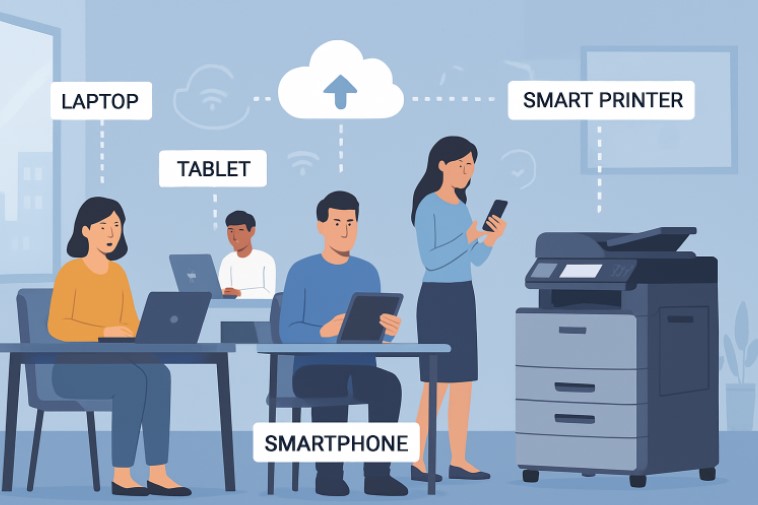
In today’s fast-paced business environment, efficiency and adaptability are paramount. One often-overlooked area ripe for innovation is the office printing infrastructure. Smart printing solutions are revolutionizing how organizations manage documents, enhance productivity, and ensure security. By integrating advanced technologies, businesses can streamline their printing processes, resulting in significant cost savings and enhanced operational efficiency.
Implementing smart printing solutions often involves partnering with experienced providers who offer comprehensive services tailored to specific business needs. For instance, companies like EverWorx specialize in managed print services, which encompass monitoring printers, automating supply orders, and providing proactive support to minimize downtime. With a focus on automation and innovation, EverWorx helps businesses simplify workflows, reduce IT strain, and maintain a smoothly running print environment.
The Evolution of Office Printing
Traditional office printers have evolved from simple output devices to sophisticated hubs of productivity. Modern printers now offer features such as wireless connectivity, mobile printing, and integration with cloud services, enabling employees to print from virtually anywhere. This transformation supports the dynamic needs of hybrid work environments, where flexibility and accessibility are crucial.
Integration of Artificial Intelligence
Artificial Intelligence (AI) is at the forefront of this transformation. AI-powered printers can predict maintenance needs, automate routine tasks, and optimize print jobs for efficiency. For instance, HP’s introduction of AI-enhanced printing solutions has set a new standard for intelligent print management, offering features that simplify and enhance the printing experience from setup to support.
Cloud Connectivity and Remote Access
Cloud printing services have become integral to modern workplaces, enabling employees to print documents from any location without requiring direct connections to printers. This capability is particularly beneficial for remote and hybrid work models, ensuring seamless access to printing resources. According to a report by the Mopria Alliance, cloud print adoption is projected to reach 55% by 2025, driven by the demands of distributed workforces.
Internet of Things (IoT) and Smart Offices
The integration of IoT devices in office environments has led to the development of smart offices, where devices communicate and collaborate to enhance efficiency. Smart printers equipped with IoT capabilities can monitor usage patterns, manage energy consumption, and even reorder supplies automatically. This interconnectedness contributes to a more responsive and efficient workplace.
Security Considerations
With increased connectivity comes the need for robust security measures. Smart printers now incorporate advanced security features, including user authentication, data encryption, and secure boot processes, to protect sensitive information. Ensuring that these devices are secure is essential to maintaining the integrity of an organization’s data.
Environmental Impact and Sustainability
Smart printing solutions also address environmental concerns by promoting sustainable practices. Features like duplex printing, energy-efficient operations, and recycling programs help reduce the carbon footprint of office printing. Additionally, cloud printing can be considered more eco-friendly, as it significantly reduces the amount of paper used and lowers carbon emissions from transportation.
Implementing Smart Printing Solutions
Adopting smart printing solutions requires a strategic approach. Organizations should assess their current printing needs, evaluate potential technologies, and consider partnering with experienced providers to optimize their printing solutions. Companies like EverWorx offer comprehensive managed print services that integrate seamlessly into existing workflows, providing expertise in implementing and managing advanced printing solutions tailored to specific business requirements.
Conclusion
The adoption of smart printing solutions is a significant step toward creating a more efficient, secure, and sustainable workplace. By leveraging technologies such as AI, cloud connectivity, and IoT, organizations can transform their printing infrastructure to meet the demands of the modern business environment. Embracing these innovations not only enhances productivity but also positions companies to adapt to future challenges and opportunities.