
Rural communities across the United States are undergoing significant transformation as farmland practices evolve in response to technology, economics, and environmental pressures. These shifts are not only altering the agricultural landscape but also redefining the social and economic dynamics that underpin many small towns. As discussions around land management and rural sustainability intensify, land professionals like Iowa Land Company are playing an increasingly pivotal role in helping landowners and communities navigate these changes.
Modern farming is more than a business; it’s a vital part of rural identity and livelihood. From advances in precision agriculture to the consolidation of small farms into agribusinesses, changes impact local jobs, economies, and lifestyles. As rural America adapts, understanding these larger implications is crucial for policymakers, farmers, and communities. There’s an urgent need for innovative, community-focused solutions. Whether driven by market or environmental factors, agricultural change requires thoughtful adaptation, investing in new technologies while protecting the social fabric that defines rural areas. These changes are also shaped by trends in land ownership, capital access, and food production. Public-private partnerships and government support are vital for economic resilience and social cohesion.
Technological Advancements in Agriculture
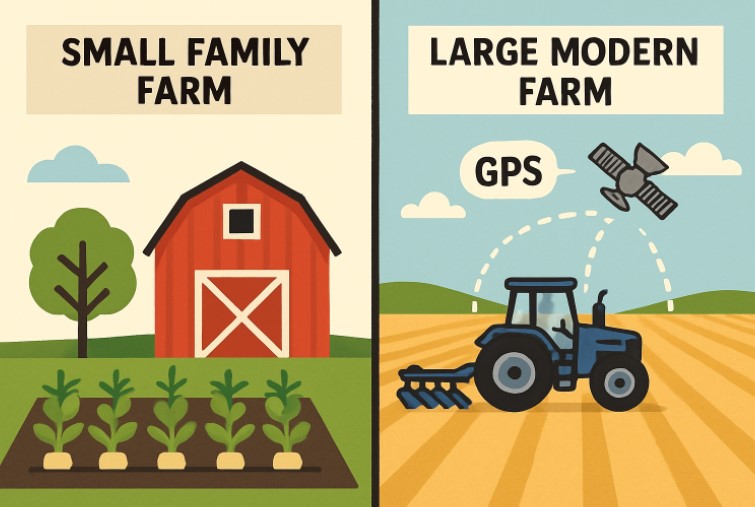
Over the past decade, technology has become a cornerstone of modern agriculture. Precision agriculture, artificial intelligence, and drone surveillance are transforming farm operations by enabling farmers to monitor fields more closely than ever before. Through satellite imagery and advanced data analytics, growers can detect crop diseases, manage water use efficiently, and maximize yields. While these technologies increase productivity, they also introduce new challenges, such as the need for digital literacy and significant capital investments in equipment upgrades.
In places like South Carolina, the adoption of high-tech solutions is credited with improving efficiency. However, farmers have noted that the learning curve can be steep, and workforce expectations are evolving rapidly. Specialized training and adaptability are now essential skills in the rural job market, underscoring how technological advancement is impacting not just farms, but also rural employment and education.
Economic Impacts of Farm Consolidation
Farm consolidation has been a significant trend, characterized by the merging of smaller, family-owned farms into larger, more industrialized operations. The number of farms in the United States has declined dramatically over the last century, while the average farm size has nearly tripled. This shift has a profound effect on the economic landscape of rural America. Job opportunities associated with diversified, small-scale agriculture have diminished, and local businesses that once depended on a dense network of family farms are feeling the impact as populations shrink.
The migration from rural to urban areas is an often-overlooked consequence of consolidation. As smaller farms disappear, so do the schools, businesses, and services they supported. This contributes to a feedback loop of economic decline that can be difficult to reverse.
Environmental Considerations and Sustainable Practices
Growing awareness of environmental issues has led communities to reconsider traditional farming. There’s increased interest in sustainable models like regenerative agriculture, focusing on soil health, reduced chemical use, and biodiversity. These practices aim to enhance climate resilience by restoring ecosystems and ensuring long-term sustainability. Results include healthier soils, improved water retention, greater carbon storage, and increased biodiversity. Farmers and local governments are collaborating to promote these methods, recognizing that economic success depends on ecological care.
Policy Influences on Farming Communities
Government intervention influences rural areas through laws protecting agriculture. All 50 states have right-to-farm laws that shield farms from lawsuits and affirm their land-use rights. Farmland preservation limits conversion to non-agricultural use, maintaining rural character. Policies must adapt to new challenges, fostering innovation, supporting new farmers, and ensuring community stability during change.
Social Dynamics and Community Changes
Changes in farmland management, beyond economics and technology, are reshaping rural life, shrinking small farms, reducing the populations of farming towns, and altering community structures, sometimes leaving schools underpopulated and civic engagement diminished. Efforts aim to reverse these trends by fostering entrepreneurship, attracting residents, and supporting next-generation farmers. Local groups are emerging to revitalize towns, preserve culture, and encourage sustainable growth, essential for maintaining rural communities’ identity and sense of place.
Future Outlook for Rural Communities
The future of rural America will be determined by how well communities, policymakers, and innovators can balance technological progress with the preservation of longstanding traditions and practices. Supporting sustainable agriculture, investing in infrastructure, and enacting forward-thinking policies will be essential to promoting economic and social vitality in rural regions.
Embracing change while honoring the past can enable rural communities to adapt and thrive in an ever-changing agricultural landscape. With collaborative action and resilient planning, these areas can continue to be places of productivity, innovation, and community spirit for generations to come.