
In the rapidly evolving digital landscape, businesses are continually seeking innovative ways to engage their audiences. The proliferation of online content necessitates that brands devise innovative and impactful methods for conveying their messages. One such advancement that’s capturing attention is the emergence of AI spokespersons—virtual presenters capable of delivering content in a human-like manner. Unlike traditional video production, these digital avatars do not require the logistics and costs associated with casting, filming, or post-production editing. AI spokespersons allow organizations to quickly adapt to changing communication needs by instantly updating content or messaging. This technology is reshaping how brands communicate, offering dynamic and interactive experiences to consumers while making professional video creation more accessible to organizations of all sizes.
The Rise of AI Spokespersons
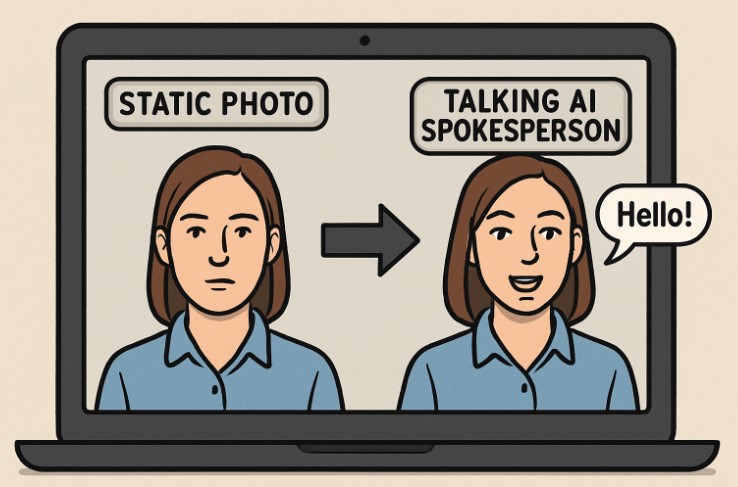
The use of AI spokespersons has gained significant traction in recent years due to their ability to create incredibly realistic video content without the need for human actors. Breakthroughs in artificial intelligence, deep learning, and computer vision primarily fuel this innovation. Tools like AI Spokesperson by Lemon Slice enable users to transform static images into talking videos by adding scripts and selecting voices, even customizing vocal style or language. Lemon Slice, an AI lab based in San Francisco, specializes in building interactive video models that bring photos to life with natural expressions and movements. Their technology analyzes a static face, animating lips, eyes, and facial features to match speech in a way that closely mimics real human movement. This process utilizes advanced AI algorithms to animate facial movements and synchronize speech, producing lifelike presentations that captivate viewers and maintain their attention. The ability to render nuanced facial expressions enables these virtual presenters to foster a sense of realism and empathy, which can be particularly useful in environments where clear communication and personal connection are crucial.
Benefits for Businesses
Integrating AI spokespersons into digital marketing strategies offers several advantages, making them an attractive option for companies both large and small:
- Cost Efficiency: Reduces expenses associated with hiring actors, filming locations, and production crews. Since all animation is handled digitally, companies can create compelling video content with minimal investment.
- Scalability: AI-generated spokespersons enable the rapid creation of multiple videos tailored to different audiences or marketing channels. This is particularly useful for businesses that want to test messaging or run campaigns in parallel without a significant production lag.
- Consistency: Ensures uniform messaging across various platforms. An AI spokesperson can deliver a brand’s message precisely, eliminating the risk of human error or on-set improvisation.
- Multilingual Capabilities: Facilitates content delivery in multiple languages by easily switching scripts and voices, broadening reach to international markets. With global marketplaces becoming increasingly important, being able to communicate efficiently in various languages is a significant competitive advantage.
Additionally, AI spokespeople never tire, can be updated instantly as campaigns evolve, and can be deployed simultaneously across multiple digital channels, making it easier than ever for brands to maintain an active multimedia presence.
Real-World Applications
Various sectors are increasingly adopting AI spokespersons to enhance their communication strategies, recognizing the technology’s versatility beyond simple marketing. For instance, the Arizona Supreme Court recently introduced AI-generated avatars, named Victoria and Daniel, to communicate news about court rulings. Their goal is to enhance public understanding and accessibility to the judicial system, particularly in an era when legal rulings can have far-reaching and complex social implications. This initiative is reportedly a first for any U.S. state court system, setting a precedent for other judicial and governmental bodies. Unlike existing court chatbots, these avatars serve as virtual spokespeople, presenting official court information in video form, ensuring that messages are accurately conveyed and more accessible to the general public. The move follows controversial rulings, including one allowing enforcement of a Civil War-era abortion ban, which sparked public backlash and highlighted the need for clearer, more direct communication from official bodies. Beyond government use, AI spokespersons are also being leveraged by e-commerce brands, educational institutions, and HR departments for onboarding or training videos, as well as customer service teams, thereby drastically reducing repetitive manual tasks and delivering information consistently to broad audiences.
Ethical Considerations
While AI spokespersons offer numerous benefits, they also raise significant ethical concerns. The potential for misuse, such as creating misleading or deceptive content, necessitates the responsible deployment of technology by businesses and organizations. As the line between real and virtual presenters blurs, viewers may find it challenging to distinguish between AI-generated content and genuine human communication. Transparency about the AI-generated nature of such content is crucial for maintaining trust and credibility with audiences. Companies using AI spokespeople should clearly disclose that their videos are generated by artificial intelligence. This helps protect viewers from misinformation and preserves brand integrity. Additionally, concerns exist regarding the use of real individuals’ likenesses without their consent, the digital manipulation of identities, and the cultural sensitivity of content created for diverse audiences. Organizations must adopt clear ethical standards and guidelines for AI spokespersons to ensure their impact remains favorable and trustworthy in the broader digital content ecosystem.
Future Trends
The future of AI spokespersons appears promising, with rapid advancements in AI, machine learning, and natural language processing poised to enhance their realism and functionality further. As technology progresses, we can anticipate more personalized and interactive experiences, where AI spokespersons adjust their message or tone in response to user inputs in real-time. Interactive video models might respond to specific questions, demonstrate product features on the fly, or adapt to the preferences and backgrounds of individual viewers. These developments will likely further blur the lines between virtual and human interactions. We may see increasing adoption in telehealth, education, and customer service, where scalable, empathetic communication is vital. As regulatory frameworks and best practices continue to evolve, the potential uses for AI spokespersons will expand, presenting both new opportunities and challenges for businesses and society as a whole.
Conclusion
AI spokespersons are revolutionizing digital content creation, offering businesses innovative ways to engage with their audiences at scale. By embracing this technology responsibly and thoughtfully considering ethical boundaries, brands can deliver compelling, cost-effective, and scalable content that resonates with consumers in an increasingly digital world. As AI spokespersons become more advanced and widespread, they are poised to become essential tools for modern communication, enabling organizations to connect with audiences in ways previously unimaginable.