
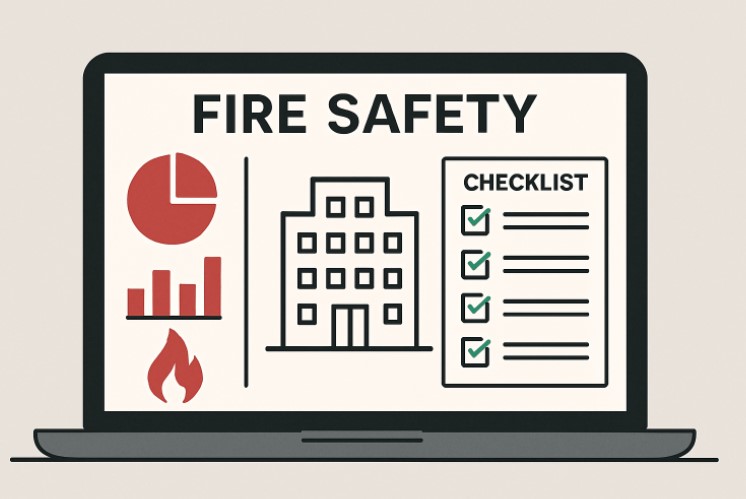
In recent years, the fire safety industry has undergone a significant digital transformation, leveraging advanced technologies to improve compliance, efficiency, and overall safety. This shift is not just about adopting new tools; it’s about rethinking processes to ensure better protection for people and property. Today, fire safety operations are becoming more proactive, data-driven, and interconnected, enabling faster decision-making and more reliable system performance. As regulations tighten and building complexity increases, embracing digital solutions has become essential for safeguarding both commercial properties and the communities they serve.
The Shift Towards Digital Inspection Software
Commercial property operators across North America are rapidly transitioning from paper-based inspections to digital systems as fire safety compliance requirements become increasingly stringent. In fiscal 2024, OSHA conducted more than 34,000 inspections across workplaces, revealing recurring violations, including missed fire safety checks, blocked exits, and misplaced maintenance records. The shift to mobile inspection platforms represents a fundamental evolution in how facility management teams maintain compliance and manage risk. Digital inspection software enables property teams to capture, store, and share inspection data in real-time using mobile devices. These systems automatically generate work orders, flag deficiencies, and create auditable trails for compliance officers to follow. Sophisticated platforms now integrate blueprint overlays, data migration from legacy systems, and ISO27001-level data security for enterprise clients.
One notable solution in this space is the Brycer Fire Alarm Inspection Software. Developed by The Compliance Engine, this platform offers a comprehensive approach to fire protection system compliance. The Compliance Engine is a web-based service that enables Authorities Having Jurisdiction (AHJs) to track and maintain code compliance, reduce false alarm activity, and provide safer communities through third-party inspection reporting and maintenance. By partnering with numerous jurisdictions, The Compliance Engine has established itself as an authority in fire safety compliance, offering services that streamline the collection of compliance data and enhance public safety.
Integration of AI in Fire Safety Operations
Artificial Intelligence (AI) is playing a pivotal role in modernizing fire safety operations. Across the industry, AI-powered tools are being adopted to support faster dispatch decisions, enhance situational awareness, and produce more transparent and actionable reporting—signaling a broader shift toward digital transformation in fire safety. This evolution comes at a critical time, as commercial properties nationwide face increasing system outages, construction delays, and regulatory pressures that demand reliable fire watch coverage. At the same time, fire departments continue to report rising call volumes linked to alarm impairments and malfunctioning fire protection systems, underscoring the need for smarter, more responsive safety solutions.
Cloud-Based Platforms for Enhanced Compliance
Cloud technology is transforming fire safety compliance by delivering real-time visibility into fire protection systems and enabling more proactive management. Cloud-based, IoT-enabled platforms allow technicians to perform automated testing remotely, generate standardized inspection reports, and submit documentation efficiently to regulatory authorities. These systems also support predictive maintenance by identifying devices that may be approaching failure—such as contaminated detectors—before issues escalate. By reducing false alarms and unplanned disruptions, cloud-driven compliance tools enhance system reliability while enabling organizations to meet regulatory requirements more efficiently.
Digital Twins and Advanced Analytics
Digital twins, which are virtual replicas of physical environments and systems, are gaining momentum in modern fire safety applications. These platforms create dynamic, data-driven 3D environments that visualize fire behavior as it evolves in real time. By enabling comprehensive scenario analysis, digital twins help safety teams assess current conditions, anticipate fire progression, and evaluate resource availability under varying circumstances. The integration of advanced analytics further strengthens predictive capabilities, supporting faster, more informed decision-making and improving overall preparedness for complex fire response scenarios.
Enhancing Evidence Management with Digital Solutions
Fire departments are increasingly adopting digital solutions to modernize evidence management and investigative workflows. Cloud-based platforms now enable the secure collection, analysis, and sharing of multiple forms of digital evidence within a single, centralized system. By consolidating data such as incident recordings, images, and reports, these solutions streamline investigative processes, reduce administrative burdens, and accelerate case resolution. The shift toward digital evidence management enhances collaboration, improves data integrity, and supports more efficient and transparent fire service operations.
Self-Testing Smoke Detectors and Automated Maintenance
Innovations in fire and life safety technology are transforming the installation, testing, and maintenance of alarm systems. Modern self-testing smoke detectors, approved to meet rigorous safety standards, can perform automated testing without manual intervention. This capability increases visibility into system health for facility managers while providing service teams with digital tools that streamline maintenance workflows. By reducing on-site testing demands and improving documentation accuracy, self-testing technologies support regulatory compliance, enhance system reliability, and help maximize overall uptime.
Collaborative Efforts to Streamline Operations
Collaborations between technology providers are further streamlining fire protection operations across the industry. Integrated digital ecosystems now enable fire and life safety contractors to manage the entire operational lifecycle—from initial inspections and installations to ongoing service, compliance tracking, and invoicing—within a single, unified platform. By connecting inspection data with day-to-day operations, these solutions eliminate workflow silos, improve data accuracy, and accelerate response times. The result is stronger compliance, enhanced safety oversight, and more efficient execution across modern job sites.
Conclusion
The digital transformation in fire safety is not just a trend; it’s a necessary evolution to meet the increasing demands for compliance, efficiency, and safety. By adopting digital inspection software, integrating AI, utilizing cloud-based platforms, and embracing innovations like self-testing detectors and digital twins, the fire safety industry is better equipped to protect lives and property in an increasingly complex world.